Image: Patrick/Pexels
“Play seems frivolous and not serious,” said Prof Karolina Westlund. “It really isn’t. It may be the emotion that you should take the most seriously.” And when it comes to dogs, that couldn’t be more true.
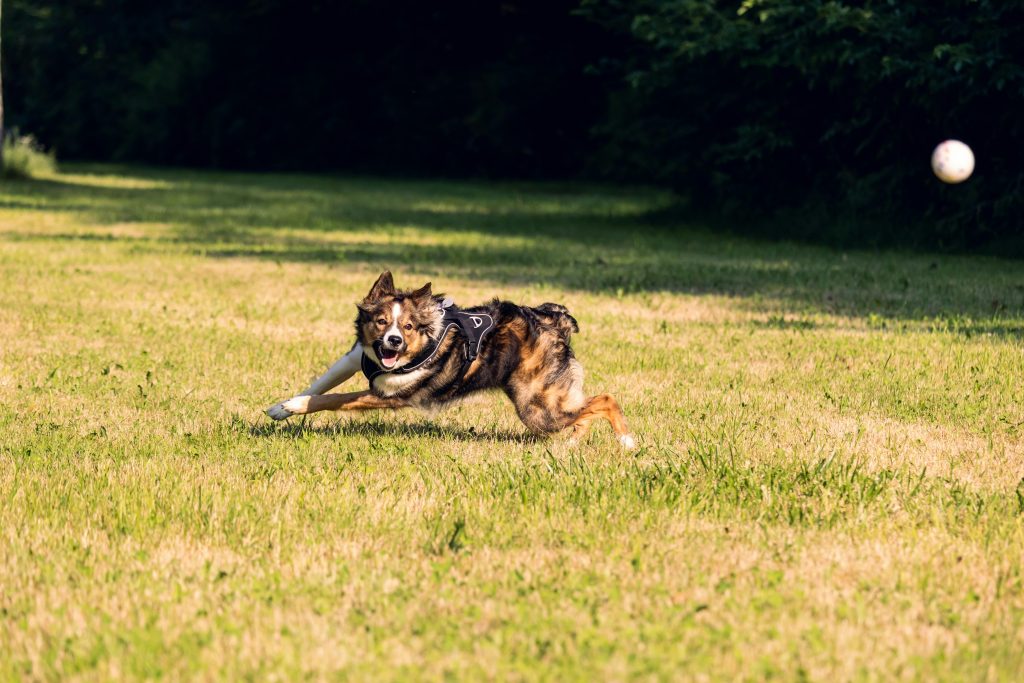
The importance of play in dogs goes far beyond a bit of fun in the yard or a squeaky toy tossed down the hallway. Play is deeply wired into a dog’s brain. In fact, it’s one of the seven primal emotional systems that social species like dogs rely on to navigate the world. When we talk about “Play” with a capital P, we’re referring to the brain system responsible for those feel-good hormones like dopamine, oxytocin and serotonin. It’s what lights up when your dog is joyfully zooming around the garden or wrestling with a buddy at the park.
This Play system plays a big role in your dog’s emotional well-being. It helps them learn how to manage their feelings, understand boundaries, and build strong relationships. Dogs that engage in regular social play – especially during puppyhood – tend to have better-developed brains, sharper social skills and stronger immune systems. In other words, how dogs learn through play isn’t just about tricks or fetch. It’s about setting them up for a happier, healthier life.
Even rats love to play. A study at Bowling Green State University showed that rats actually laugh when tickled and start looking forward to it. They bonded with the humans who played with them. So if rats can form friendships through laughter and fun, just imagine the impact of play on our dogs.
Play is more than just fun and games. It prepares dogs to deal with life’s curveballs. It sharpens their problem-solving skills and even helps them practise natural behaviours like stalking, chasing and mating – just in a harmless way. But how can you tell if two dogs are playing or actually fighting? That’s where dog play behaviour explained gets interesting. Real fights have a purpose and structure. Play looks messy, with random moves, role reversals and exaggerated signals like play bows and goofy barks. You’ll often see a big dog lying down to play with a tiny one – self-handicapping to keep things fair.
Now let’s talk about types of dog play. You’ve got same-species play (dog with dog), different-species play (dog with cat or human), object play (with toys), and locomotory play (like the zoomies). But here’s a key point: not all dogs love to play with others. Just like people, some are more introverted or unsure. That’s especially true for rescue dogs who might not have had the chance to learn how to play. For these pups, starting with food-based enrichment activities for dogs – like lick mats or treat puzzles – can build their confidence.
This brings us to toys. The best toys for dogs aren’t just about quantity; they’re about variety. One client once proudly showed off his dog’s toy collection: 30 identical tennis balls. That’s like giving a kid 30 of the same puzzle and expecting them to stay interested. There are different toy categories for different needs: puzzle toys for mental stimulation, chew toys for teething, fetch toys for exercise, tug toys for bonding, scent toys for nose work, and plush toys for comfort. And yes, training toys can also double as rewards to boost focus during sessions.
Playing fetch in the pool can be a great low-impact option for strong swimmers, but not all dogs benefit from high-impact games. Puppies have developing joints, and older dogs might have arthritis. So it’s important to adapt play to the dog’s age and physical ability. That’s part of responsible play, especially in multi-dog homes where size differences require extra management to keep smaller dogs safe.
For sound-sensitive dogs, loud squeakers or barking at the park might be too much. And some dogs don’t enjoy rough play – particularly touch-sensitive breeds. Always let your dog’s body language guide the session.
The bottom line? Play is essential. It’s not just cute – it’s critical. When you understand the benefits of play for dogs and how to play with your dog in a way that suits their personality and needs, you’re helping them live their best life.